
Bright Light Perspective | Hip-Hop • Culture • Society
Editorial: This commentary distinguishes reported events from allegations and interpretations. It does not claim knowledge of anyone’s private motives or relationships.
When Black Love Becomes Public Entertainment
For years, Remy Ma and Papoose were celebrated by many hip-hop fans as an example of loyalty and commitment. Papoose’s public support during Remy’s incarceration helped make their relationship a symbol of perseverance. Their subsequent public dispute has complicated that image.
When private pain becomes public entertainment, who benefits—and what messages are audiences encouraged to celebrate?

September 5: Remy Ma and Millyz’s “Say Yea” Promotion
By September 5, 2026, behind-the-scenes footage from Remy Ma and Millyz’s collaboration “Say Yea” was circulating online. In a bathroom clip, Millyz appeared to place a hand around Remy’s neck as she smiled and filmed. The footage was part of a music-video promotional rollout, as reported by The Shade Room and HOT 97.
This footage predates Papoose’s “Jezebel” release and should not be described as a response to that song. The image does not prove violence or coercion; it may depict consensual staging. Nevertheless, audiences can question why imagery that evokes physical domination is used in entertainment promotion. The artists’ different racial backgrounds do not themselves establish wrongdoing.

September 11: Papoose Releases “Jezebel”
Papoose released the diss track “Jezebel” in September 2026, criticizing Remy Ma and making allegations about their marriage. These are his claims, not independently established facts. Complex’s coverage documents the song and its context.
Calling a woman “Jezebel” is not culturally neutral. The word has biblical roots, but in American racial history the Jezebel stereotype portrayed Black women as inherently sexually available and morally suspect, rationalizing exploitation. Using that label as an insult deserves criticism in its own right.
September 17: Another Promotional Video
Remy shared additional footage with Millyz on September 17. Some viewers interpreted its timing as an answer to Papoose’s song, but that interpretation does not prove her intent. The footage was also tied to “Say Yea,” according to iHeart’s September 18 report.
September 25: The “Jezebel” Jacket
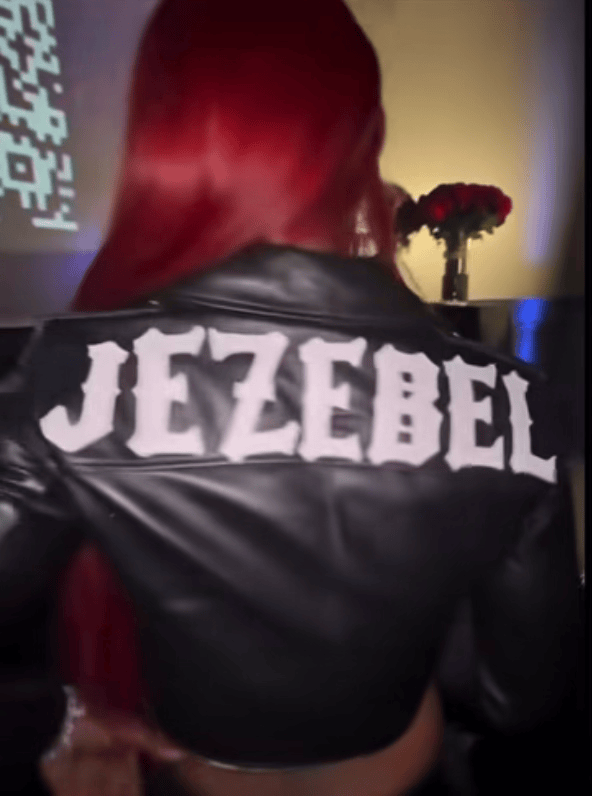
At an event celebrating her “Alimony” EP on September 25, Remy appeared in a black jacket displaying “JEZEBEL” across the back and a matching necklace. This appearance came after Papoose’s diss track. The Shade Room and Kicks & Grips reported on the outfit.
Was the jacket an attempt to reclaim an insult, ridicule a critic, or draw attention to a release? Its timing invites those questions, but the clothing alone cannot establish Remy’s motive. Reclaiming a degrading label does not automatically erase its historical meaning.
When Controversy Becomes Currency
Outrage can drive clicks, comments, streams and attention. A diss track becomes a headline; a provocative pose circulates; a jacket turns into a debate. None of that proves these artists deliberately engineered a dispute for profit. It does expose the incentives of an entertainment economy in which controversy can become commercially useful.
Not every viral moment deserves applause. Not every provocative image represents empowerment. And not every effective promotional tactic is culturally responsible.
The Bright Light Perspective
We should hold two ideas at once: entertainers have the right to express themselves, and audiences have the right to question the messages being sold to them. That scrutiny must be consistent. Papoose’s choice to use a degrading label and Remy’s choice to display it publicly are both open to criticism.
One celebrity marriage cannot define Black love, and its breakdown cannot discredit it. Nor should criticism of these images become a license to demean Black women, vilify Black men, or assume wrongdoing based on interracial collaboration.
The bigger issue is what we allow entertainment to teach us about dignity, relationships and respect. Culture is shaped not only by what artists produce, but by what audiences choose to celebrate.
The People’s Conversation
Is the “Jezebel” jacket an act of reclamation, a provocative response, or an example of a harmful historical stereotype becoming entertainment? Should artists consider the cultural history of their imagery? Share your view respectfully.
Bright Light Entertainment News — Culture Lives 365. 💡 We shine our Bright Light on it!
Reporting and source notes
Event reporting: The Shade Room (September 5); HOT 97 (September 7); Complex (Papoose’s diss track); iHeart (September 18); The Shade Room (September 25); Kicks & Grips (September 26). Images were supplied by the publisher; their original creator and reuse rights have not been independently authenticated.


Leave a Reply